
Find out how to view and manage draft and submitted transaction reports using the transaction reporting dashboard.
The reporting dashboard is the entry point to view and manage your draft and submitted transaction reports.
It provides a consolidated view of:
- draft reports
- submitted reports
- submission details and status
- submission receipts.
The dashboard is available for both threshold transaction reports (TTRs) and suspicious matter reports (SMRs).
There is a version of the reporting dashboard in our TTR/SMR training environment. You can use this version to explore the dashboard before you start reporting to us. You can learn more in our quick reference guide on the TTR/SMR training environment.
How to access the dashboard
- Go to AUSTRAC Online.
- Log in with your username and password.
- Select Reporting then Make a Report.
- Select Transaction reporting dashboard.
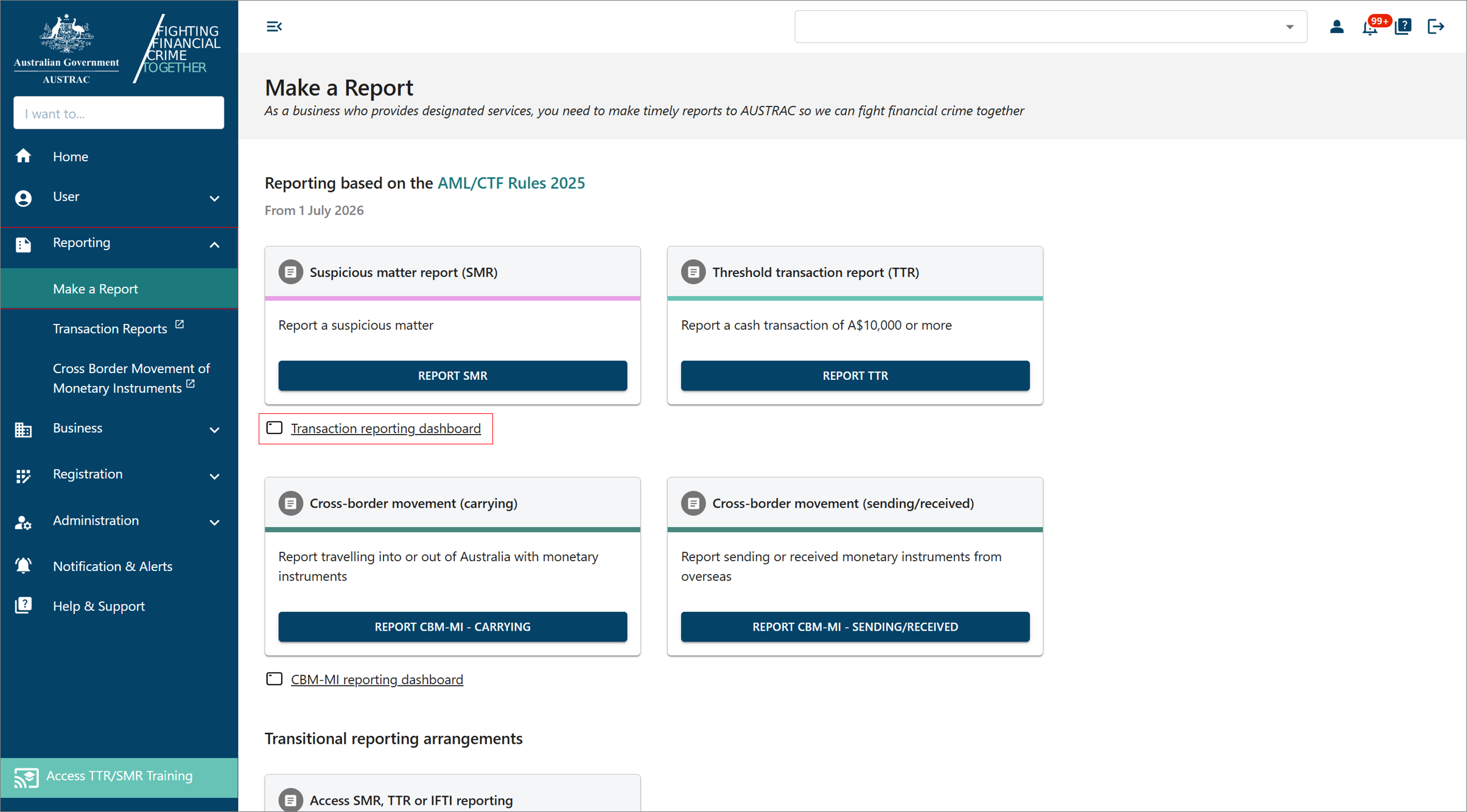
Accessing the training environment version
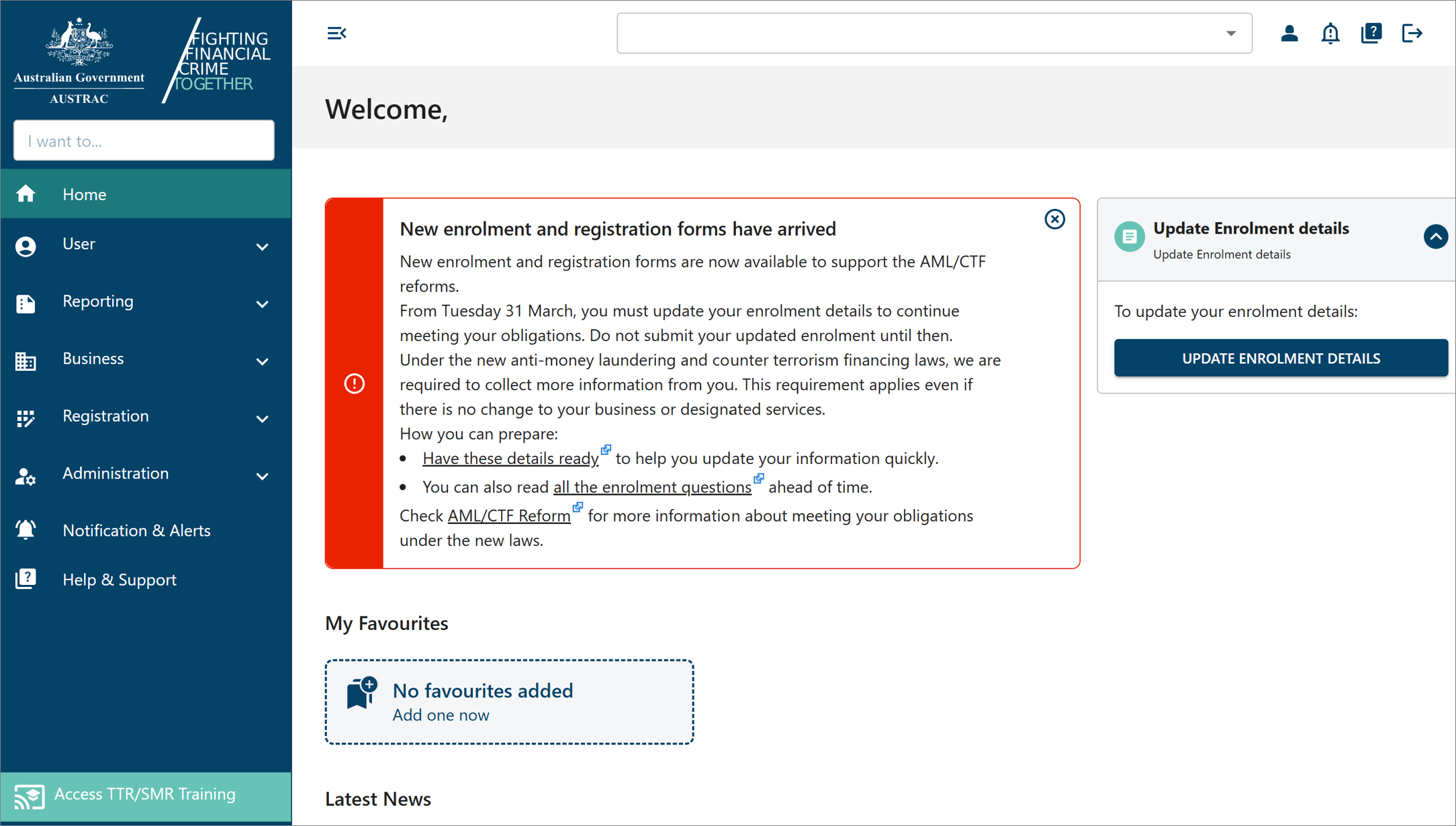
To access the dashboard in the training environment:
- Select Access TTR/SMR Training on the left-hand menu.
- On the reporting home page, select View Dashboard in the Transaction Reporting Dashboard section.
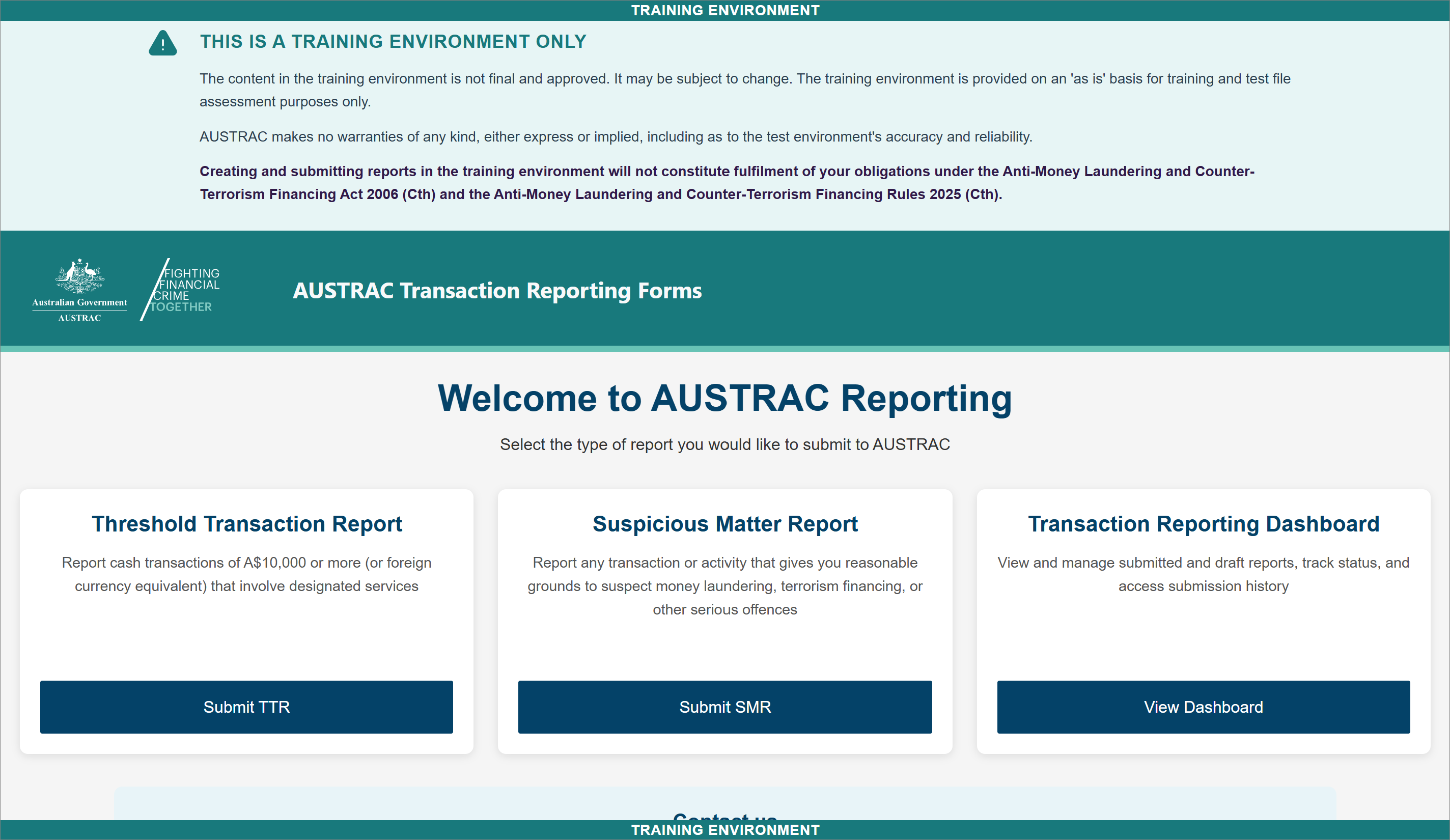
How to use the dashboard
View submission details
From the dashboard, you can:
- view submitted transaction reports
- check the submission status
- access submission details, such as submission date and report type.
View and manage draft reports
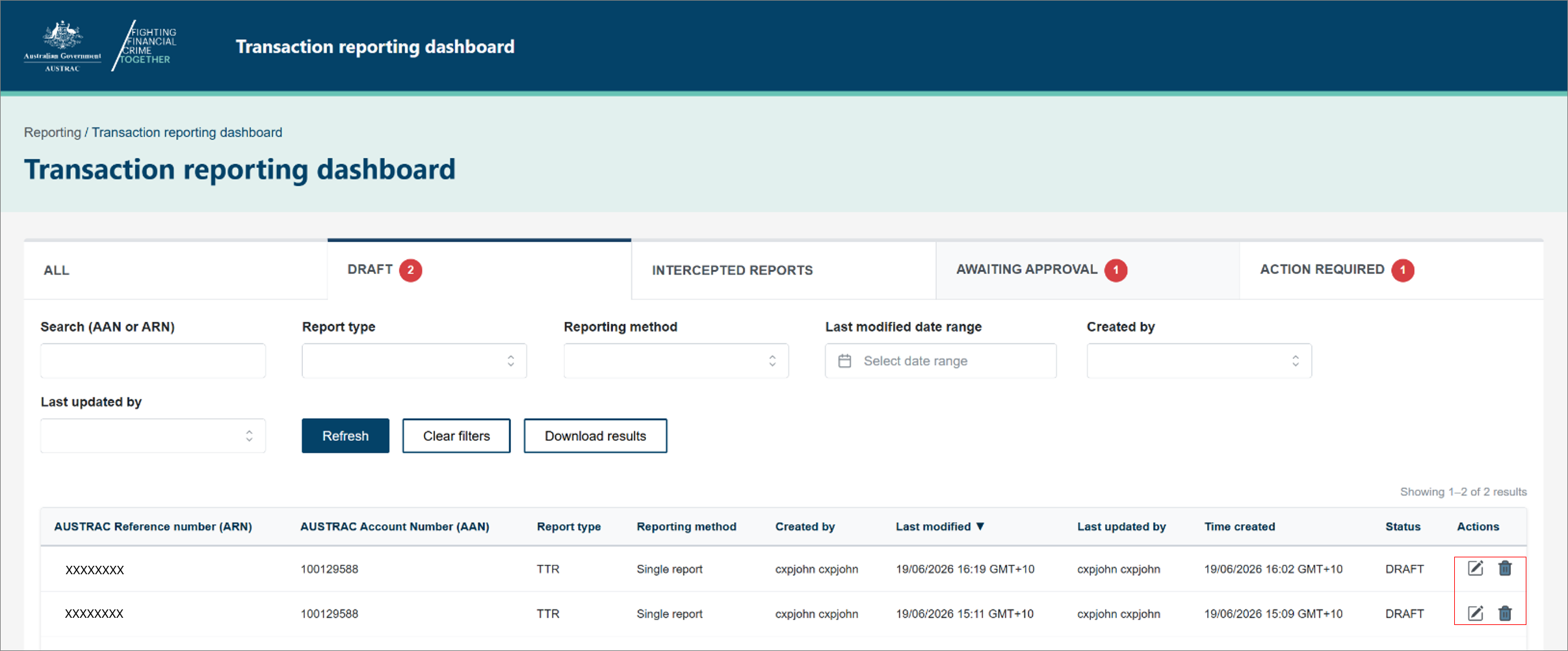
Select the DRAFT tab on the reporting dashboard to view your draft transaction reports.
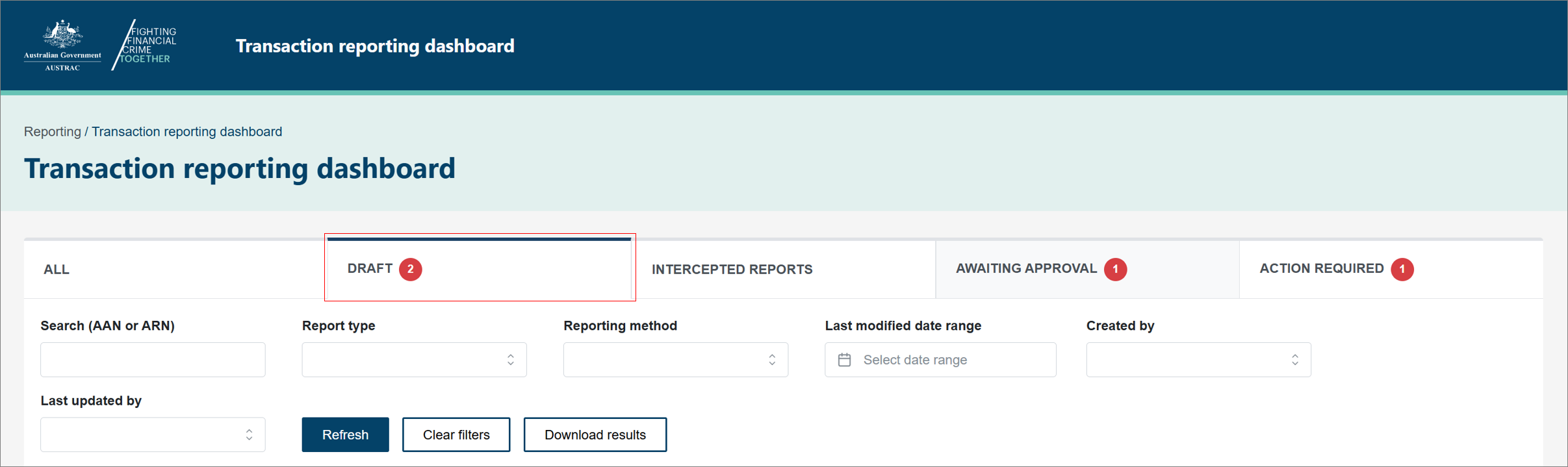
Drafts include:
- in‑progress reports
- reports not yet submitted.
From the dashboard, you can:
- resume or edit a draft report by selecting the edit icon in the Actions column
- delete a draft by selecting the delete icon in the Actions column.
Drafts allow you to pause, review, update or remove reports before submission.
Accessing your receipts
You can access a receipt for reports you have successfully submitted.
- On the reporting dashboard, locate the submitted report.
- Select the AUSTRAC reference number (ARN) link for the report.
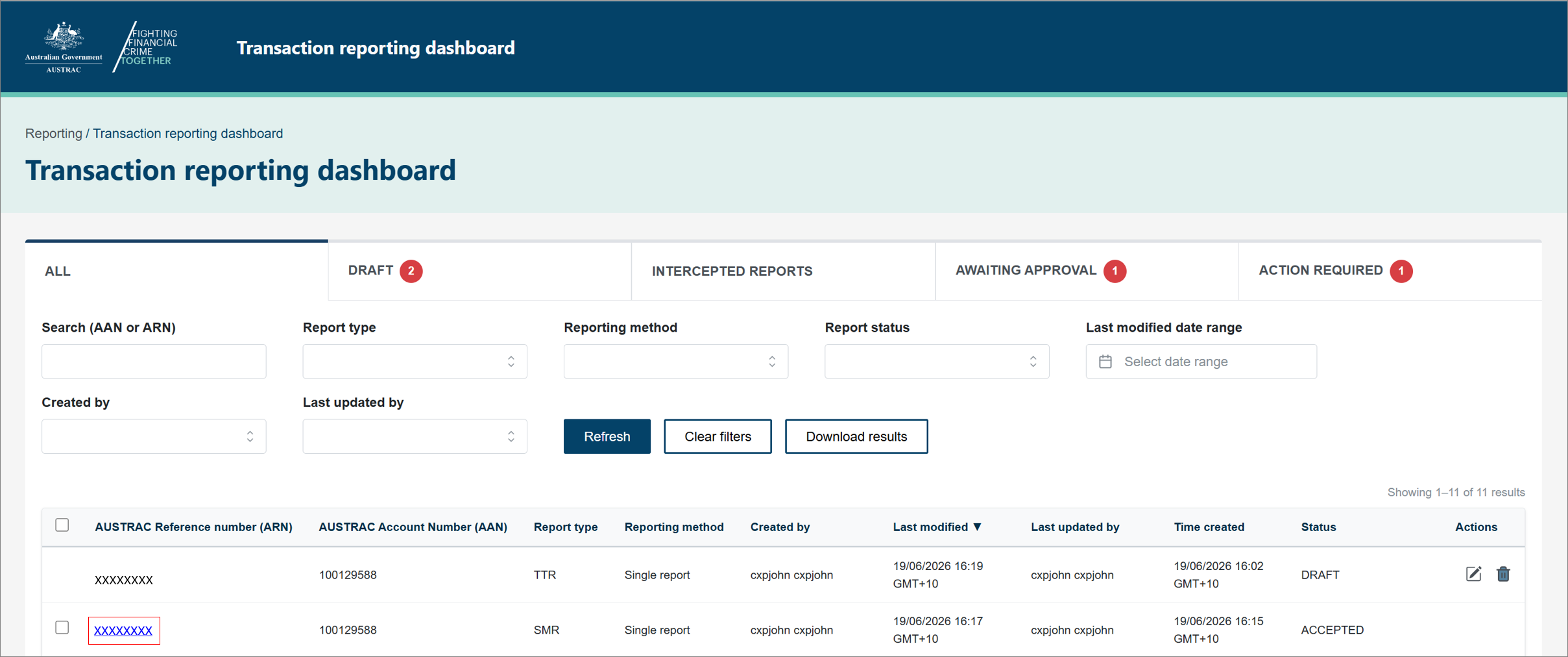
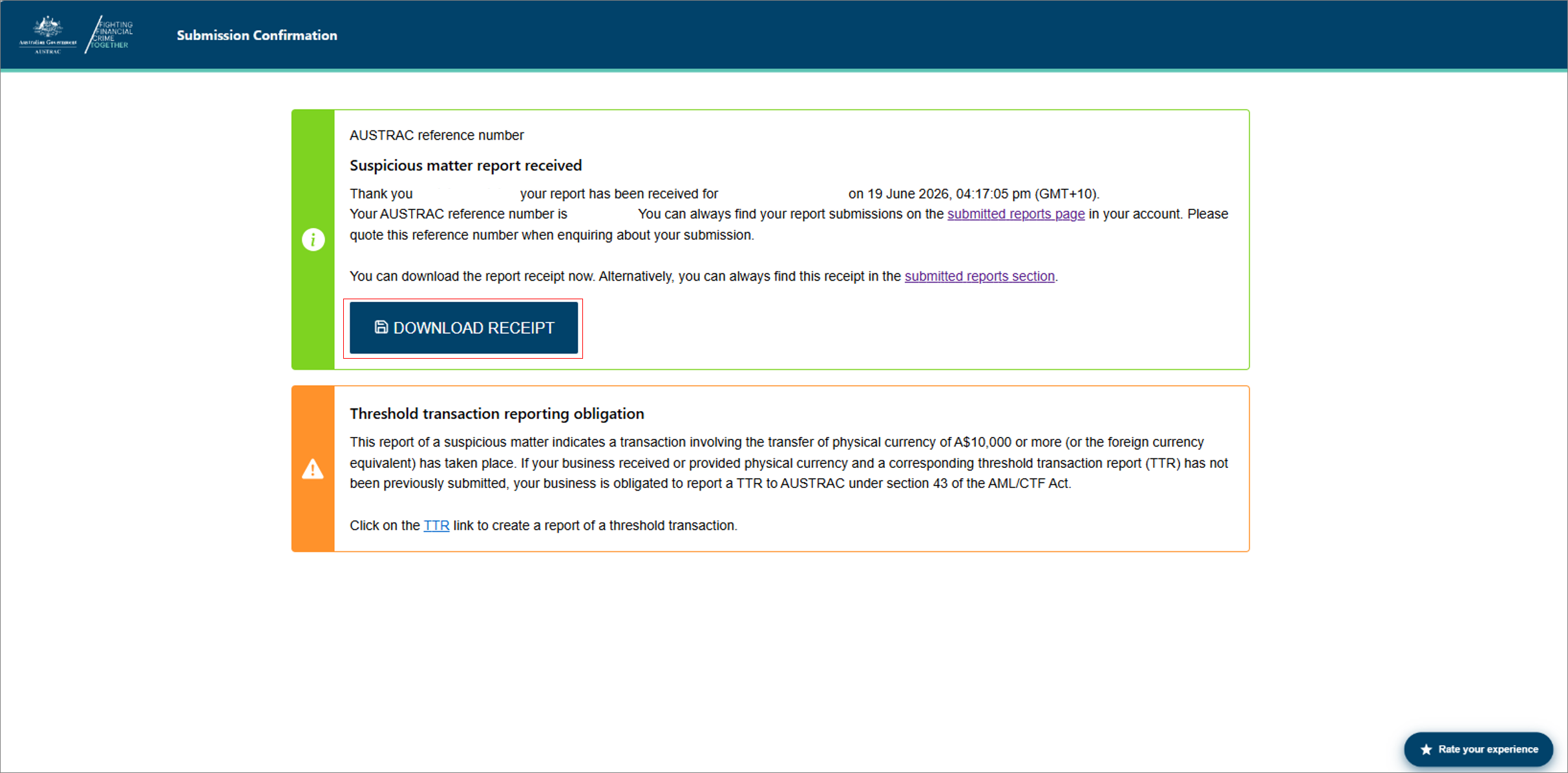
This opens the submission confirmation page, where you can view the report details.
- Select DOWNLOAD RECEIPT to save a copy for your records.
This guidance sets out how we interpret certain Australian legislation, along with associated Rules and regulations. Australian courts are ultimately responsible for interpreting these laws and determining if any provisions of these laws are contravened.
The examples and scenarios in this guidance are meant to help explain our interpretation of these laws. They’re not exhaustive or meant to cover every possible scenario.
This guidance provides general information and isn't a substitute for legal advice. This guidance avoids legal language wherever possible and it might include generalisations about the application of the law. Some provisions of the law referred to have exceptions or important qualifications. In most cases your particular circumstances must be taken into account when determining how the law applies to you.