
Find out how to transition your designated services from a digital currency exchange (DCE) provider to the virtual asset service provider (VASP).
If you are a reporting entity registered as a DCE, you must transition to VASP and update your enrolment details between 31 March and 29 July 2026 to continue to meet your regulatory obligations.
Learn more about virtual asset services.
How to transition from DCE to VASP
- Go to AUSTRAC Online.
- Log in with your username and password.
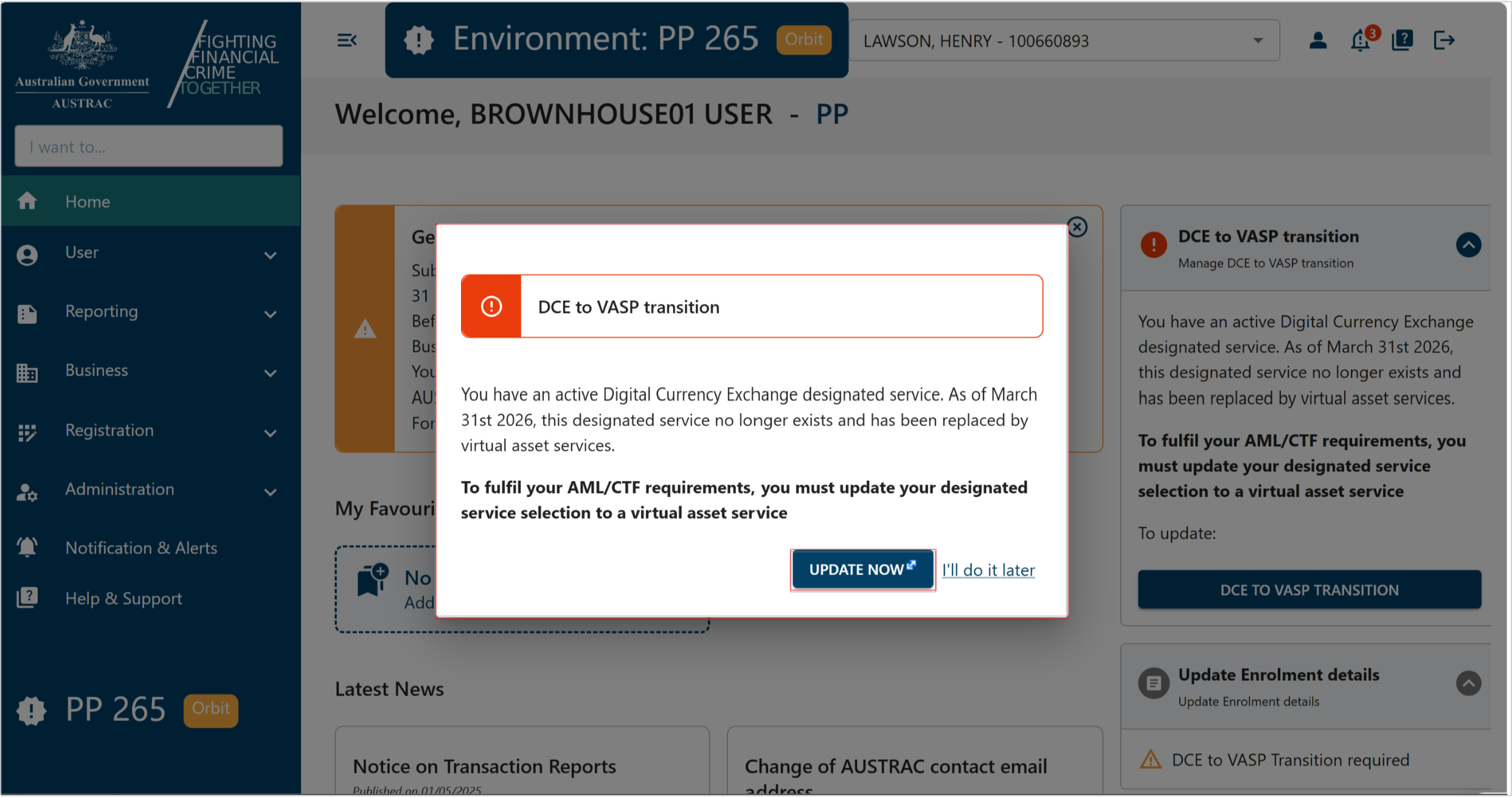
- A pop-up message will appear prompting you to complete the DCE to VASP transition.
- Select UPDATE NOW to transition to VASP services.
- A form will appear prompting you to select all the virtual asset services you provide or intend to provide.
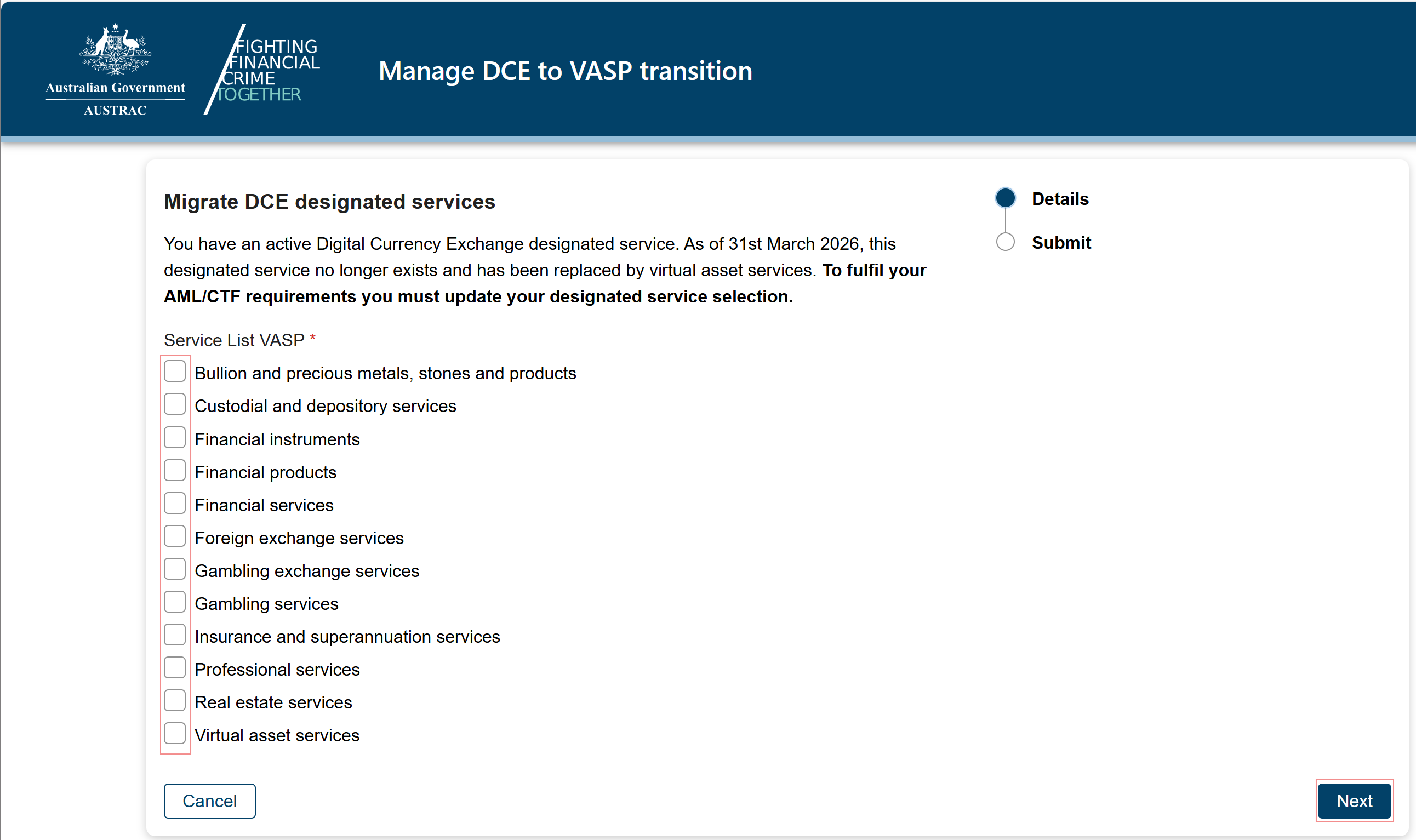
- Select Next.
- Update the details of the person submitting the form.
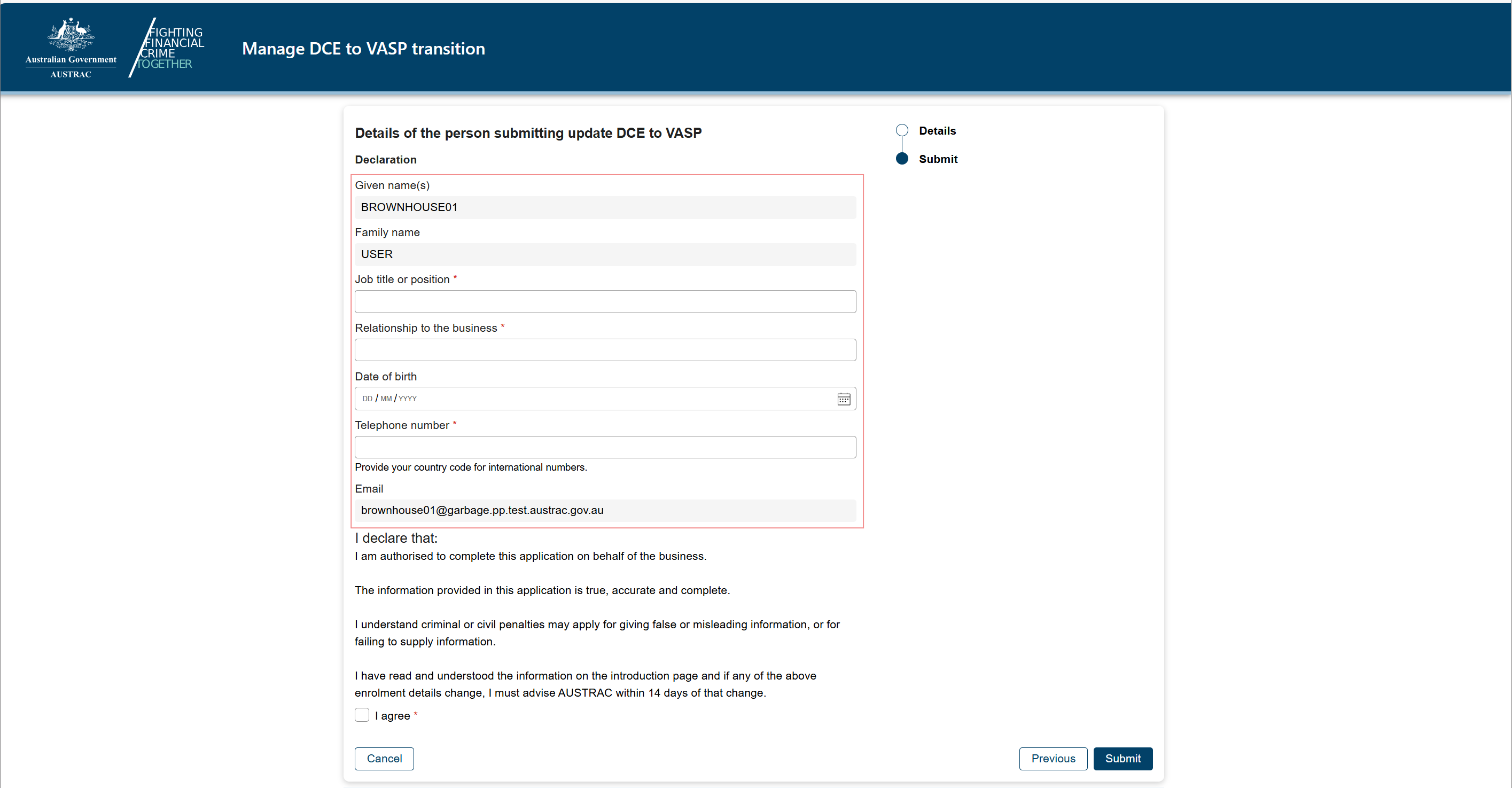
- Read the declaration.
- Check the I agree box to agree with the declaration.
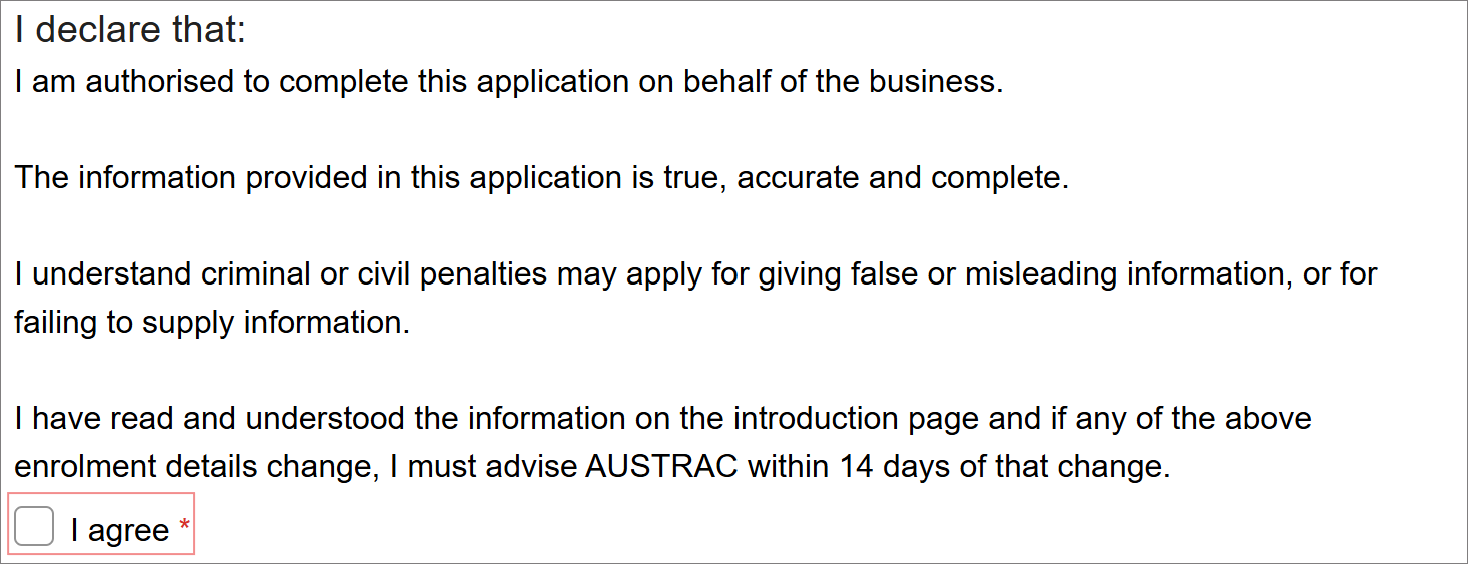
- Select Submit when you’re ready to submit your form (after checking I agree).
- Once submitted a confirmation page will display the receipt number. You can quote this to AUSTRAC for any enquiries about your submission.
- Select Done.
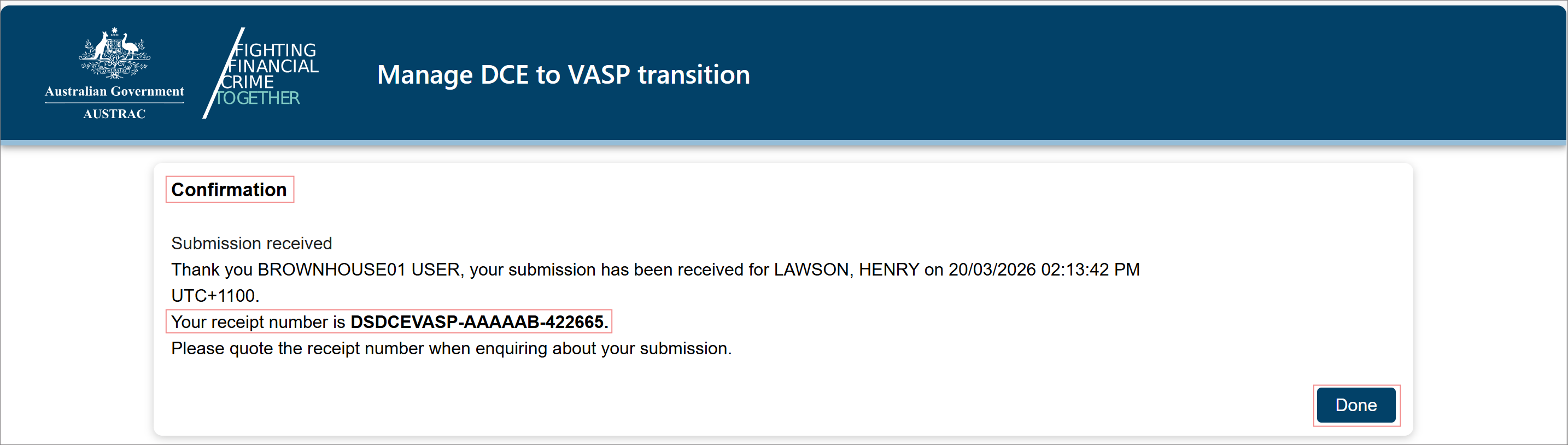
You’ll get a submission confirmation email from contact@austrac.gov.au with your receipt number, submission date and time.
You can log into AUSTRAC Online to view or check the progress of your submission or switch back to the browser tab to update your enrolment details, continue with other tasks or log out.
If you select I’ll do it later
If you selected, I’ll do it later, a reminder will appear on the right-hand side of the homepage showing that you have an active DCE designated service.
Select the DCE to VASP transition button when you want to update, then follow the steps outlined above.
Note: You will not be able to update your enrolment details until you complete the DCE to VASP transition.
This guidance sets out how we interpret certain Australian legislation, along with associated Rules and regulations. Australian courts are ultimately responsible for interpreting these laws and determining if any provisions of these laws are contravened.
The examples and scenarios in this guidance are meant to help explain our interpretation of these laws. They’re not exhaustive or meant to cover every possible scenario.
This guidance provides general information and isn't a substitute for legal advice. This guidance avoids legal language wherever possible and it might include generalisations about the application of the law. Some provisions of the law referred to have exceptions or important qualifications. In most cases your particular circumstances must be taken into account when determining how the law applies to you.